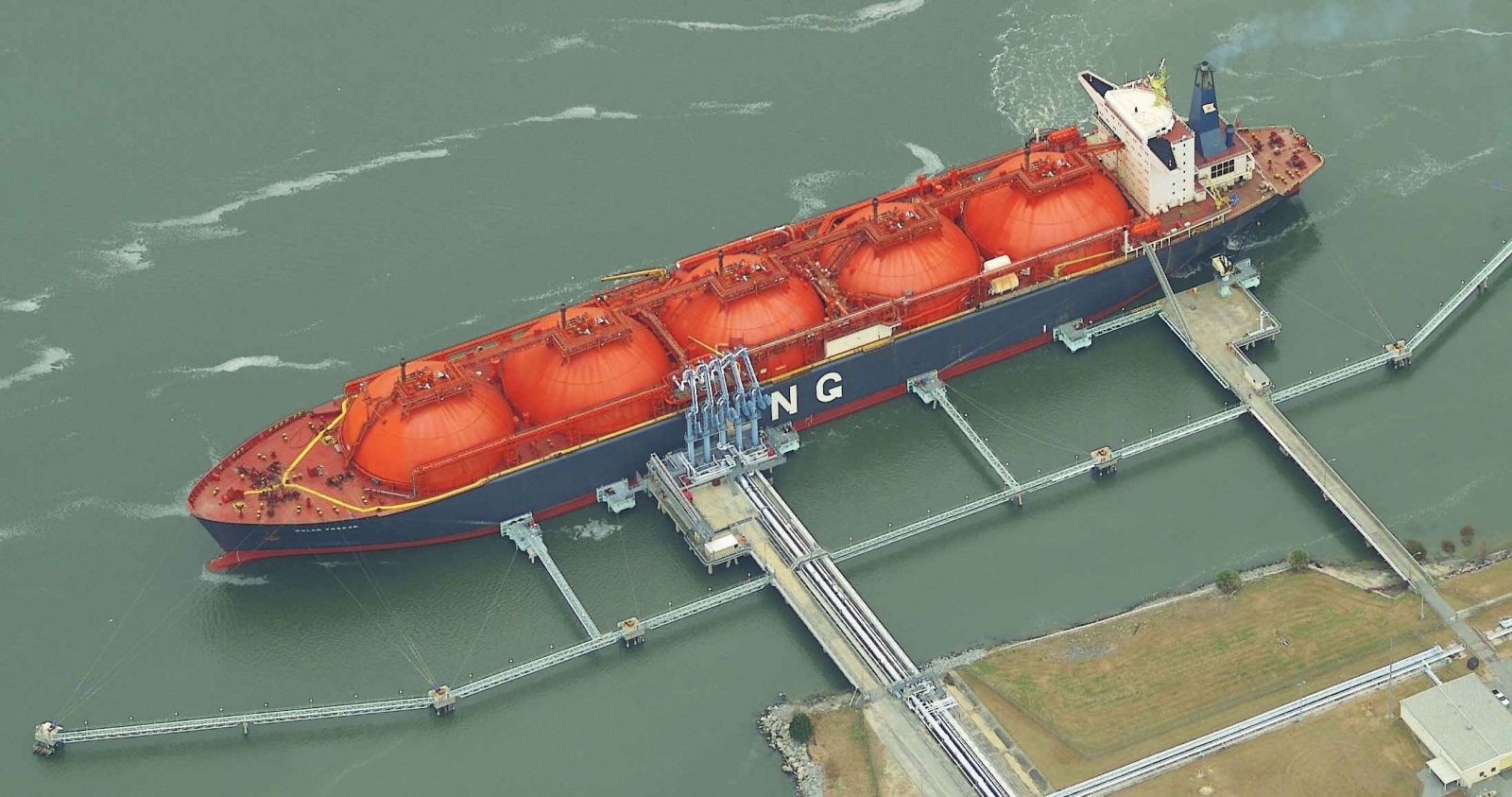

In what will drastically transform the natural gas market, the European Union has agreed to stop all Russian gas and LNG imports by the end of 2027, while the US is pursuing a comprehensive energy policy that includes southeast Europe and the Mediterranean.
The International Energy Agency says a “wave” of new LNG production capacity is set to come on stream this year and in 2026 will transform the world market into one dictated by buyers.
The Partnership for Transatlantic Energy Cooperation conference (P-TEC) last week in Athens, with huge participation from the US and countries of southeast Europe, confirmed the pivotal importance of Greece in facilitating natgas and LNG supplies, helping the countries of the region to stop dependence on Russian gas.
The US is developing a larger plan for the wider region around energy and American companies, that includes solving the long-standing regional problems.
Through these developments, Greece is emerging as a key energy ally for the US in Europe.
The Cyprus energy minister said gas exports from the offshore Cronos field to Egypt are likely to start by end-2027. Besides commercialising Cronos, he also anticipates the burgeoning collaboration with Egypt will be instructive for developing the country’s other gas resources.
ExxonMobil and Chevron have been increasing their Egypt offshore footprint in recent years and last week saw them acquire deep offshore acreage adjacent to their existing blocks in the region.
In a very important development, the Chevron-Hellenic Energy consortium was selected as the preferred investor for 4 blocks south of Crete. This selection opens a new chapter in hydrocarbon exploration and carries significant geopolitical weight for Greece, the wider region, relations with Turkey, and US interests in the eastern Mediterranean.
The $35 bln gas deal to export Leviathan gas to Egypt has been paused by PM Netanyahu for political reasons, but also due to concerns about Egypt’s ability to pay, Israel’s internal gridlock and electricity price, and US’ shift in posture. The consensus is that eventually it will go ahead.
Egypt is the world’s second largest growth LNG market in 2025. It is hard to know if the country can afford to continue buying gas at this pace.
Eni has discovered a gas-bearing layer at the offshore Zohr-9 gasfield boosting output by 70 mmcf/d. It is a welcome addition, but probably not big enough to make a real difference to Egypt’s gas production problems.
Energean has proposed 1 bcm/year subsea gas pipeline from Israel to Cyprus, saying that it could begin exporting gas within 12 months of receiving approvals.
ExxonMobil has joined Energean and HelleniQ Energy taking a 60% interest in Block 2 in the Ionian Sea, signalling growing US interest in the eastern Mediterranean. This is Greece’s first gas exploration drilling deal in 40 years, deepening Greece-US energy ties.
Bloomberg reports that Russia and Turkey are in talks to renew their existing gas deals and are likely to keep the same gas volumes.
Further away, with US naval deployment building-up, tensions over Venezuela are escalating fast. A conflict could cripple heavy crude exports and drive diesel and crude prices sharply higher worldwide.
Deloitte estimates that US LNG exports could rise by 25% in 2025 and 7% in 2026, with volumes potentially doubling by 2030, and nearly tripling in the early 2030s if all approved projects proceed.
Europe desperate for replacement
Following the EU-US agreement on the import of American energy, the EU agreed to stop the import of Russian oil and gas, and crude oil by end-2027. The law bans new Russian gas contracts from 2026 and will phase out existing long-term contracts by January 2028.
European LNG imports are surging to a seasonal high as it replaces Russian pipeline gas, with more than half of that coming from the US.
The US and Qatar jointly warned the EU that its Corporate Sustainability Due Diligence Directive (CSDDD) is an “existential threat,” risking LNG supply affordability through extraterritorial fines. This unprecedented alliance is pressuring the EU to compromise on its Green Deal core policies.
This was followed by QatarEnergy and ExxonMobil executives who warned of Europe’s exit over CSDDD.
CSDDD requires companies operating in the EU to address environmental risks and human rights across their supply chains, and aims to hold them accountable for harm even outside Europe. Violating it includes fines of up to 5% of a company’s net worldwide turnover.
EU countries have agreed on 90% emissions reduction goal for 2040. But the goal has been “watered-down”, allowing countries to “buy foreign carbon credits to cover up to 5% of the 90% emissions-cutting goal”.
Comeback of US shale producers
US shale companies are moving forward with production plans despite $60 oil prices, with some announcing slight output increases for this year and 2026.
Advancements in drilling technology have made producers more efficient, allowing them to pump more crude for every dollar spent.
US giants are better positioned than their European counterparts for M&A activity. Proven reserve life of European majors has been declining steadily. They are in need of exploration success.
Global divisions over the Trump-led fossil fuel push laid bare at the COP30 climate leaders’ meeting. The consensus has gone, with some arguing that this isn’t the time to act, saying that tackling climate change can wait.
China leads solar, green output
China is forecast to install 66% of the world’s solar capacity and 69% of wind capacity in 2025 – more than half the world’s wind and solar capacity for the third year running.
China is now making more money from exporting green technology than the US makes from exporting fossil fuels. This trend will continue simply because renewables are cheap.
China’s clean-energy revolution is reshaping markets and politics. The world’s biggest manufacturer now has an interest in the world decarbonising.
For the past 15 years, China produced over 75% of the world’s solar PV modules, at very competitive prices.
In the northwest Qinghai Province, the land was once barren. But now, solar panels block wind and sunlight, allowing grass to grow and turning desert into grassland, allowing sheep to graze.
China is building nuclear reactors faster and cheaper than the rest of the world. It has nearly 30 reactors in development, and in April it approved a $28 bln plan for ten more.
China’s oil and gas giants have spent close to $470 bln since 2019 to boost output and cut reliance on imports. This has made PetroChina the world’s biggest spender.
Dr Charles Ellinas, Councilor, Atlantic Council