
After repeatedly threatening to leave OPEC, from as far back as 2021, the United Arab Emirates finally left the oil cartel on May 1.
The reasons it gave are much the same: the UAE has been unhappy about the quotas assigned to it, and Saudi Arabia’s leadership.
Geopolitical friction between the two has intensified, not only in the Middle East, but also in Yemen and Sudan. The Iran war exacerbated these, exposing deep-rooted divisions.
The UAE is also unhappy with Russia’s support of Iran that has targeted it during the war more than any other country in the Gulf.
UAE’s exit poses challenges on OPEC’s grip on the oil market, but it is unlikely to lead to a serious market shift. Even though it leaves OPEC weaker, OPEC+ still controls close to 50 mln b/d in petroleum liquids. After post-war normalisation and with oil demand still growing to 2050, albeit at a slower pace, OPEC+ will eventually recover control.
A stronger impact on OPEC may come from oil consuming countries diversifying their oil purchases away from the Gulf. With a weakened OPEC, it will come down to Saudi Arabia to bear most of the burden of managing that.
Having built an oi production capacity of 4.85 mln b/d, the UAE wants the freedom to sell as much oil as possible and use the revenues to continue diversification of its economy. In effect, it is repositioning to monetise its reserves faster, free of OPEC constraints.
In addition, the UAE can balance its budget at much lower oil prices than Saudi Arabia, at just below $50/b, compared to Saudi Arabia’s $90/b, giving it less incentive to restrict output. Once the war is over, oil demand will shoot up, and the UAE wants to take advantage of this.
Israel’s supply of laser defence systems to the UAE to fend-off Iran’s missiles is an example of the emirates’ changing politics, placing more emphasis on its relations with the US and Israel than its Gulf neighbours.
The official announcement on May 4 of a strategic alliance with Israel confirmed that, but it may deepen UAE isolation from its neighbours.
Timing of the announcement
The timing the UAE’s announcement was strategic and lines-up with the overlap of market, geopolitical and internal OPEC+ dynamics that make an exit both more valuable to the UAE and less costly than in normal times.
Following the Iran war and the Strait of Hormuz disruption, prices spiked and volatility surged, with physical flows, not quotas, becoming the constraint. As a result, leaving OPEC carries less immediate downside, because the market is already under stress.
Post-war, everyone will prioritise restoration of lost volumes, rather than defend quotas. An unconstrained UAE is well-placed to do exactly that. Its production capacity is 4.85 mln b/d now, expected to rise to 5.0 mln b/d by 2027, while its pre-war quota was 3.4 mln b/d.
This was confirmed by Suhail Mohamed Al Mazrouei, Minister of Energy and Infrastructure of the UAE, who said that the shift reflects the need for greater flexibility and faster decision-making in response to rapidly changing global energy market conditions.
But he added that the UAE remains committed to working with producers and consumers to support energy security, while strengthening its role as a key contributor to reliable global supply – meaning that the emirates will act responsibly.
So, the UAE is acting at a moment when future market share is being decided, not just short-term prices, and wants to maximise this by giving priority to production volumes and monetising its production capacity fully.
The UAE exited OPEC just before the next phase of market share competition begins. Timing is driven not by an expectation of a global oil demand collapse, but in expectation of intensifying competition in a still-growing market. It has chosen market share over price.
The IEA believes that oil consumption will peak in the early 2030s as the world transitions to renewable energy sources. This is another way to read the UAE’s action.
In this view, it makes sense to raise as much money from oil reserves as quickly as possible before demand craters. But many others expect global oil demand to carry on growing to 2050. In that case OPEC+ influence will continue.
Impact on OPEC and OPEC+
Saudi Arabia is acting swiftly to strengthen its position. It has fully restored its East-West oil pipeline, bypassing the Strait of Hormuz, and is now pumping 7 mln b/d.
As a result, the Saudi kingdom has de-risked its exports from the Strait, saying it no longer needs it in re-establishing export capability early, allowing it to deliver more, faster and reliably, defending its market share.
This allows Saudi Arabia to regain dominance while the UAE is still partially export-constrained, taking advantage of its large spare capacity, more than 2 mln b/d to increase production and actually deliver it.
It has also allowed Saudi Arabia to reassert itself.
OPEC+ confirmed on May 3 a modest production increase for June. Seven of its members agreed to raise output targets by 188,000 b/d, even though it can materialise only after the Strait of Hormuz opens. Notably this included Iraq and Kazakhstan, that some said might be candidates to follow UAE’s exit.
Nevertheless, OPEC+ sources said that, “the move is designed to show the group is ready to raise supplies once the war stops and signals that OPEC+ is pressing on with a business-as-usual approach, despite the departure of the UAE.” It also sends a message of continuity and control.
Once the Strait of Hormuz is opened and full normalisation is achieved, the total petroleum liquids production of OPEC+, without the UAE, is likely to be about 48-50 mln b/d, with spare capacity about 3-4 mln b/d.
These quantities are still sufficient to influence and often lead the market, but no longer sufficient to tightly control it at all times, especially in over-supplied markets.
The risk is that without the UAE, OPEC+ could become more Saudi-centric and more fragile, especially in normal, non-crisis, conditions. But it can still stabilise prices, defend a price-floor and set direction.
OPEC has seen many upheavals in the past and re-surfaced back strong. This is more likely than not to be the case again.
But risks remain
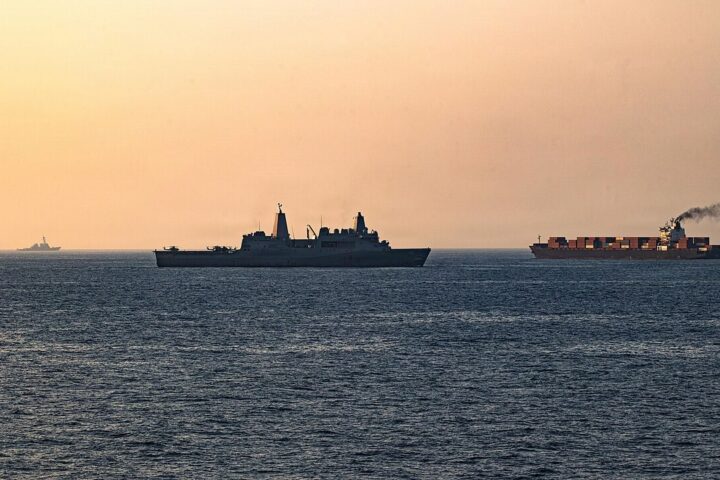
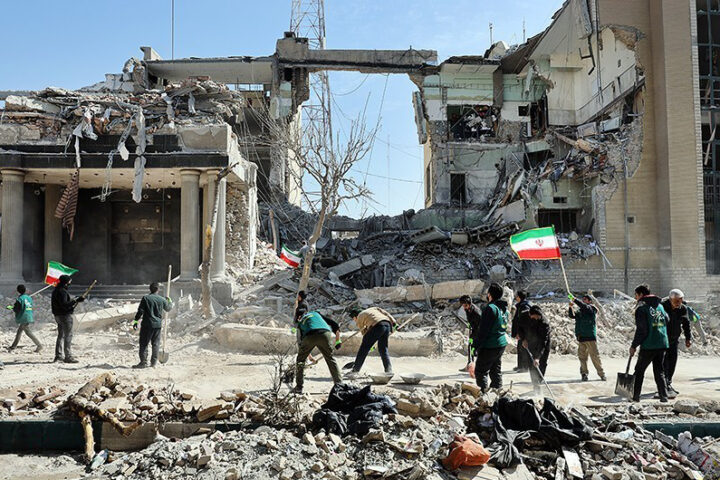
Fighting flared up again on May 3, as strikes on a crucial UAE oil port and several ships tested a shaky cease-fire. The Fujairah port was burning “after multiple Iranian strikes hit the only remaining UAE oil export outlet and endpoint of the pipeline UAE built to bypass the Strait of Hormuz.” But by May 5, Trump paused Project Freedom citing progress with Iran.
Meanwhile, Saudi Arabia is leading a Gulf-axis favouring regional diplomacy, entering into arrangements that facilitate maximising its oil exports. And in this process, it is “beginning to reassess its economic geography, reducing its dependence on Hormuz and re-orienting policy towards the Red Sea.”
But with the UAE committing to invest over $50 bln to expand production to 5 mln b/d+ by 2027/2028, the challenge to OPEC+ is clearly on.
Dr Charles Ellinas, Councilor, Atlantic Council
X: @CharlesEllinas