
 By Chris Michael
U.S. President Donald Trump’s foreign policy continues to provoke strong reactions and growing concern among America’s traditional allies.
His approach has been marked by unpredictability, highly personalised diplomacy, and frequent shifts in strategic direction, creating the perception of a superpower drifting away from the long-standing principles of reliability, consistency and alliance-based leadership.
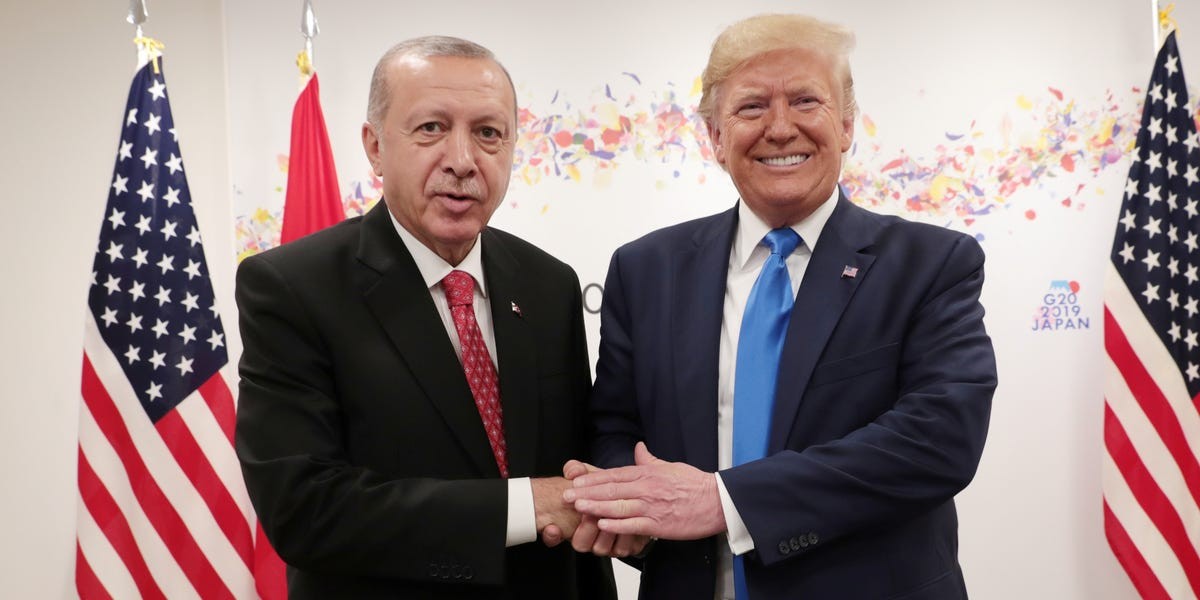
A notable example is Trump’s unusually close personal relationship with Turkish President Recep Tayyip Erdoğan. Combined with Washington’s desire to keep Turkey firmly anchored within the western geopolitical sphere, this relationship appears to have encouraged policy initiatives that have caused considerable unease in Greece, Cyprus, Israel and several European capitals.
The U.S. administration’s decision to move forward with the approval process for the sale of aircraft engines to Turkey, along with public discussions regarding Ankara’s possible return to the F-35 fighter jet programme, have been interpreted by many analysts as signs of a policy that rewards Turkey, despite the serious disagreements that continue to exist between Ankara and many of its western partners.
These developments are particularly significant given that Turkey was removed from the F-35 programme following its acquisition of the Russian S-400 air defence system, a decision that was regarded at the time as essential to protecting NATO’s security and technological integrity. Today’s discussions about restoring defence cooperation inevitably raise questions about the consistency of U.S. foreign policy.
At the same time, Donald Trump’s participation in the NATO Summit hosted by Turkey provided President Erdoğan with an important diplomatic and symbolic advantage. At a time when many western governments continue to express concern over the rule of law, democratic institutions and human rights in Turkey, the image of a particularly warm relationship with the American president strengthens Ankara’s international standing.
Yet, the broader issue extends well beyond US-Turkey relations.
The more fundamental concern is the overall direction of American foreign policy. Repeated policy reversals, confrontational relations with long-standing allies, controversial positions on NATO, shifting tariff policies, and Trump’s frequent personal interventions in major international affairs have all contributed to growing uncertainty throughout the international system.
That uncertainty is not confined to diplomacy. It has also spread to the world economy, where market volatility has become an increasingly persistent feature.
Contradictory signals
Businesses, investors, and governments alike struggle to anticipate Washington’s next move, affecting international trade, investment decisions and broader economic stability. When the world’s largest economy sends contradictory signals, the consequences are felt far beyond American borders.
For decades, America’s global leadership rested not only on its military and economic strength, but also on its credibility as an ally. That trust was built through consistent commitments, predictable foreign policy and close cooperation with democratic partners.
Today, many analysts argue that President Trump’s approach has eroded this reservoir of confidence, fostering the perception that personal relationships between leaders increasingly outweigh long-term strategic interests and institutional commitments.
The gradual distancing of the United States from many of its traditional allies is more than a diplomatic concern. It affects the balance of power in the eastern Mediterranean, fuels anxiety across Europe, and reinforces the perception that the international order is entering a period of heightened instability.
In a world already facing armed conflicts, geopolitical rivalry, and mounting economic challenges, consistency and credibility remain indispensable qualities for any global power. According to many of Trump’s critics, his policies have moved in precisely the opposite direction, placing additional strain on transatlantic relations, while undermining international stability.
Foreign policy cannot be built solely upon personal relationships between political leaders. It requires institutional continuity, strategic consistency and respect for long-standing commitments that underpin international security. When these principles are weakened, the resulting deficit of trust becomes extremely difficult to restore.
History shows that great powers do not lose influence only through military or economic decline. They also lose it when their friends and allies no longer regard them as reliable partners.
That may well be the greatest challenge facing the United States today. Donald Trump’s foreign policy — characterised by abrupt reversals, contradictory decisions and an increasingly transactional approach to alliances — risks leaving behind not a stronger America, but one whose credibility has been significantly diminished and whose actions have contributed to growing uncertainty in both international politics and the global economy.
Chris Michael is a political commentator and business consultant