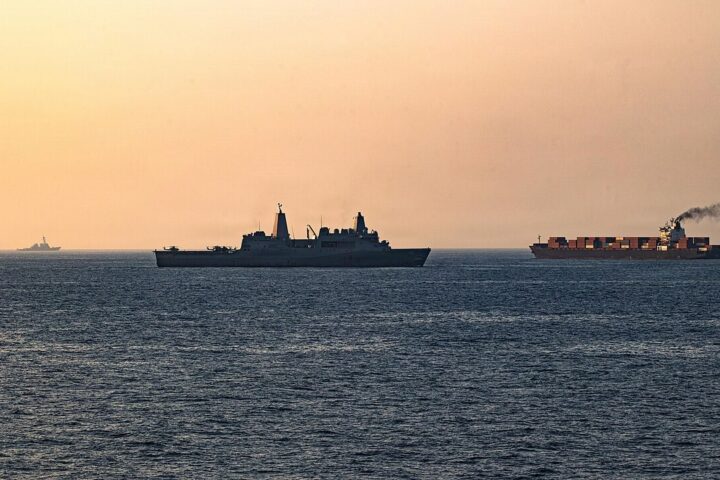

Investors must prepare for higher interest rates due to the escalating Iran conflict, CEO of a leading independent financial advisory has warned.
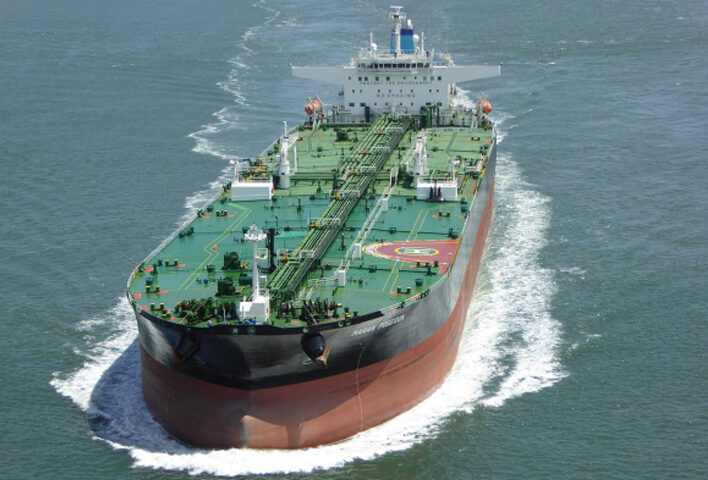
Oil markets convulsed following threats to shipping through the Strait of Hormuz, the passage that carries roughly 20% of the world’s crude and natural gas supply.
An Iranian Revolutionary Guard commander declared that the Strait of Hormuz, the single most critical artery for global crude shipments, has been shut and threatened to ignite any vessel attempting passage, according to reports.
The benchmark Brent crude surged above $87 a barrel on Tuesday after jumping more than 9% in a single session before recovering lower, while West Texas Intermediate climbed past $83, up more than 8%, marking one of the sharpest short-term spikes in over a year.
“When oil surges with this magnitude and velocity, inflation doesn’t edge up slowly, it gathers force rapidly,” warned deVere Group’s Nigel Green.
“Energy is embedded in every supply chain. A sustained move toward $90 Brent fundamentally alters the inflation outlook and forces a repricing of interest rate expectations.”
Green explained that markets had been positioning for lower borrowing costs, but this narrative is now under threat.
“A renewed energy shock of this scale reduces the scope for rate cuts and raises the probability that monetary policy remains restrictive for longer than investors had assumed.”
The deVere CEO added that higher oil prices feed directly into transport, logistics, food production and household energy bills.
“That pressure shows up quickly in headline inflation and then seeps into core readings through wages and corporate pricing decisions. Central banks are acutely aware of this transmission mechanism.”
If inflation expectations begin to drift upward again, monetary authorities will respond decisively.
As such, investors must prepare for “rates staying elevated well into 2026, and potentially moving higher if inflation proves stubborn.”
Bond yields adjusting
On fixed income markets, Green said that, “bond yields are already adjusting to reflect reduced confidence in near-term rate cuts. Duration risk becomes more pronounced in this environment.”
The US dollar is attracting renewed safe-haven flows. In periods of geopolitical escalation combined with inflation risk, “capital gravitates toward dollar-denominated assets. We’re seeing increased demand for Treasury bills and high-quality fixed income as investors seek both yield and security.”
Oil at these levels also compresses corporate margins. Companies facing higher input costs will either absorb the impact or pass it on to consumers.
“Both scenarios have consequences for earnings forecasts and equity valuations,” noted the deVere CEO. “Markets can’t assume a rapid resolution.”
“Portfolio positioning must reflect the possibility that elevated oil prices persist for months, not days,” Green said, suggesting that, “investors should reassess exposure to sectors heavily dependent on energy-intensive supply chains. Pricing power, balance sheet strength and cash flow resilience are central metrics.”
As regards investor complacency, he said this is not a typical volatility episode driven by sentiment alone.
“This is a supply-side shock with tangible macroeconomic consequences. Monetary policy flexibility will narrow as inflation pressure builds.”
Europe and parts of Asia remain highly exposed to imported energy costs. A sustained oil rally will strain growth while complicating inflation control.
“Divergent policy responses could intensify currency volatility,” the CEO concluded.