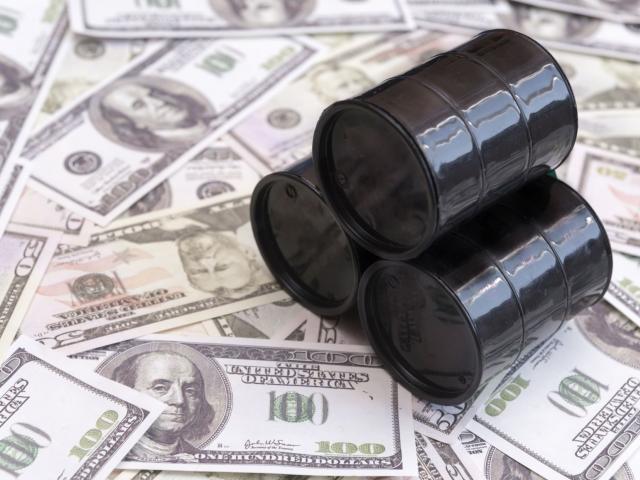

OPEC continues to increase production, but oil prices are not really coming down massively, as geopolitics continue to outweigh oversupply concerns.
Oil majors expect the market surplus to shrink over time, with production declines and robust demand supporting the market in the medium term.
Traders say the oil market will weaken before recovering next year, with the benchmark Brent seen at $62-66.50 a barrel in a year’s time.
The price of crude tumbled to a five-month low on an IEA report on October 14 of a ‘large surplus’. But with the IEA consistently underestimating demand, a day later, the benchmark Brent price drop was limited to less than $2/b.
An oil market report by OPEC showed a 1.3 mln b/d demand growth in 2025 and forecasts 1.4 mln b/d oil demand growth in 2026.
ExxonMobil CEO Darren Woods sees oil oversupply as a very short to near-term issue.
According to ExxonMobil, with annual decline rates expected to reach 10% to 15%, global oil and gas investment is insufficient to meet rising medium and long-term demand.
ConocoPhillips CEO, Ryan Lance, is not buying the “oil glut” story, either.
The physical market, however, tells a different tale. US inventories are low, OECD stocks are not building, and many of the OPEC+ supposed new barrels are not materialising. They are just “paper barrels”.
Oil major CEOs and traders expect the crude market to weaken before recovering next year.
But production declines and robust demand will support the market in the medium term, with surplus oil shrinking over time. They expect Brent in the range of $62-66.50/b in a year’s time.
TotalEnergies CEO Patrick Pouyanne warned that non-OPEC oil output will stall if the benchmark WTI stays below $60/b, with US shale likely to plateau by 2026. As a result, OPEC could soon regain market control.
US shale output growth is entering a new phase: higher costs, tougher rock and fewer sure bets. Rising costs and declining inventory mean producers will face a more speculative phase of growth.
However, Saudi Aramco CEO, Amin Nasser, warns of a global oil shortage if the energy industry fails to invest.
Analysts now believe that oil consumption will be more robust than previously predicted, due to a slower switch to clean energy, with a global shortfall of about 10 mln b/d by 2040. In order to produce that, it would require over 100 bln barrels of new reserves by 2040.
According to McKinsey’s annual Global Energy Perspective 2025, fossil fuels are projected to retain a large share of the energy mix beyond 2050, while variable renewable energy sources and gas-powered generation will likely dominate new power supply.
The IEA, under pressure from the U.S., has introduced new scenarios in its World Energy Outlook 2025 report based on current trends, including returning to a “Current Policies Scenario” for the first time since 2019. This new scenario estimates energy demand based on real-world conditions, not hypothetical policy changes.
“Energy addition”
For the last few years, climate and energy policymakers convinced themselves the world was inexorably moving away from fossil fuels. But even the IEA now admits that it is not.
Based on the new scenario, by 2050, the IEA estimates oil consumption at 114 million b/d. For now, the world is not performing an “energy transition” but an “energy addition,” where renewables top up oil, gas and coal.
Demonising the oil sector and calling for the “end of oil” has been replaced with a call for more investment, to offset the natural decline in existing oil and gas fields to meet expected demand levels.
The IEA now says that, “if current levels of production are to be maintained, over 45 mln b/d of oil and around 2,000 bln cubic metres of natural gas would be needed in 2050 from new conventional fields”.
ExxonMobil has signed a new deal with Iraq’s Oil Ministry to develop the Majnoon supergiant field estimated to contain 38 bln barrels of oil in place.
Iraq resumed oil exports through Turkey after two and a half years, but it is not expected to impact European energy security. This is a major development for the Middle East, with repercussions at the domestic and international level.
On the other hand, and to keep costs low and save for investments, job cuts in the oil industry keep climbing: ExxonMobil plans to cut 2,000 jobs, ConocoPhillips is cutting 20-25% staff, Chevron plans to idle 15-20% of its workforce, and BP says its cutting 15% of corporate jobs.
Dr Charles Ellinas, Councilor, Atlantic Council
X: @CharlesEllinas