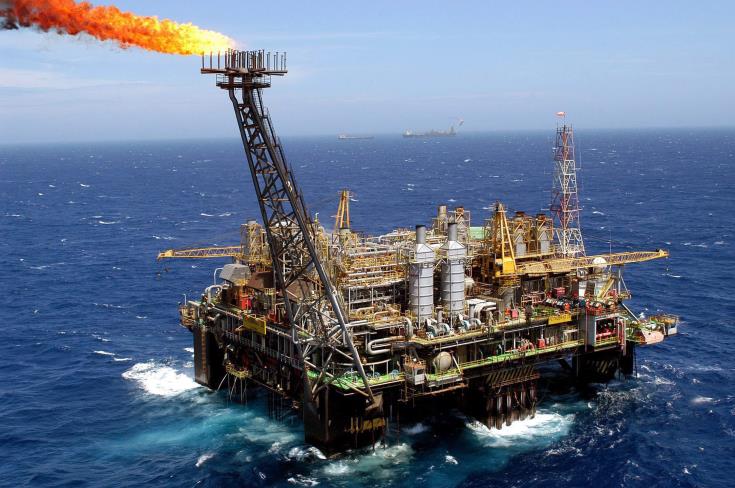

According to McKinsey, global natural gas demand could rise by 26% by 2050.
The coming LNG supply wave is already here, with global supply expected to increase by 60% by 2030, thus lowering prices.
Given the massive reduction in battery manufacturing costs, LNG will soon be competing with batteries, not renewables to provide flexibility to intermittent power supply. The acceleration of battery deployment at lower costs strongly suggests LNG will need to price down to compete.
Orders for turbines for natural gas power plants are vastly outpacing supply, fast becoming a bottleneck, threatening the world’s ability to keep pace with rising electricity demand.
Egypt is planning to invest $5.7 bln for 480 new wells over five years, betting big on oil and gas.
Backed by fresh BP and Eni deals, planning to invest $8 bln and $5 bln, respectively, in new exploration projects, it hopes to reverse years of decline and reclaim energy stability. A bold move for a nation still battling currency and debt woes.
Turkey has embarked on gas import diversification, signing $43 bln worth of LNG deals with US suppliers. By 2028, domestic production and LNG imports are projected to exceed 26 bcm, cutting dependence on Russian and Iranian gas.
Europe struggling with policy
Following the EU-US agreement on the import of American energy, the EU agreed to stop the import of Russian oil and gas by 2028. The law would ban new Russian gas contracts from 2026 and phase out existing long-term contracts by January 2028.
Political shifts, over-regulation and economic and competitiveness concerns are weakening implementation of the Green Deal in Europe. In effect, the Green Deal is ‘no longer an ecological, but an economic agenda’.
Germany’s Chancellor Friedrich Merz vows ‘stick in the wheels’ of the Brussels machine, accusing it of over-regulation.
Merz said he planned to bring a “precise list of demands” and “very concrete demands” to limit overregulation from the European Commission, especially with regards to energy regulation.
These changes are weakening the Green Deal’s overall impact, while the EU insists it is working to balance climate ambitions with economic competitiveness.
The EU continues to experience economic decline, marked by sluggish growth, high debt, and falling competitiveness in key sectors like technology and manufacturing. A contributory factor is high energy costs.
More than half of the EU’s electricity in the second quarter of 2025 came from renewables, with solar becoming the main source of electricity.
But despite that, or as some say as a result of it, European wholesale electricity prices remain very high, on average, over three times higher than in the US.
Darren Woods, CEO ExxonMobil, is highly critical of Europe, becoming less and less competitive on the world stage and going in the wrong direction. Even France’s political meltdown is weakening Europe.
Total Energies and Siemens, writing on behalf of 46 European companies, urged the EU to abolish one of the Union’s flagship corporate sustainability laws in order to boost the continent’s competitiveness.
Europe has become highly dependent on fossil fuel imports. In 2024, almost 90% of all fossil gas consumed in the EU was imported.
This reliance exposes its economies and households to price volatility, high costs, supply shocks, and geopolitical risk while slowing our path to climate.
US faces challenges
The world economy is in an age of disorder.
We are witnessing two huge events: the abdication of the US as global hegemon and the uncontrolled onset of what could prove to be the most important of all technological innovations, artificial intelligence.
Driven by the US, the Net-Zero Banking Alliance announced It will “cease operations immediately.” It is a stark sign of the industry’s ESG pullback amid resilient fossil fuel demand and conservative pressure.
Donald Trump said that PM Narendra Modi pledged India would stop buying Russian oil. India’s commerce secretary confirmed it could purchase US oil, but at “the right price”, while maintaining a diversity of sources.
China going all-electric
China is fast becoming an electro-state, with a global impact. It is electrifying everything it can. Its companies now dominate many clean technology industries.
According to Ember, in 2023 the share of electricity in final energy consumption in China reached 32% — with the industrial sector being the largest consumer at nearly 60% — and is increasing by about 1% per year.
China would have almost as much battery-based or non-pumped hydro storage installed by the end of 2027 as the entire world does today.
On the other hand, China’s oil demand outlook is improving heading into 2026. A push toward petrochemical expansion is offsetting structural challenges in fuel consumption.
Climate needs a reset
In California, batteries consistently supplied more than a quarter of electricity during this year’s spring and summer peaks. As a result, in the first eight months of 2025, gas generation declined 37% from 2023.
Mega batteries are unlocking an energy revolution. Battery costs are down 50% in comparison to 18 months ago, and 95% since 2010. They are driving the clean energy transformation worldwide. Several suppliers are developing 10MWh containers.
Renewable energy overtook coal as the world’s leading source of electricity in the first half of this year, with 34.3%, a historic first, according to new data from
There is a growing realisation that energy transition and the switch to clean energy is not happening as fast as expected. There is a call for climate and clean-energy community to undertake a pragmatic reset: wind back historical over-reach, accept harsh realities, address legitimate concerns, refresh its offer and find new ways of communicating with a confused public.
Dr Charles Ellinas, Councilor, Atlantic Council
X: @CharlesEllinas