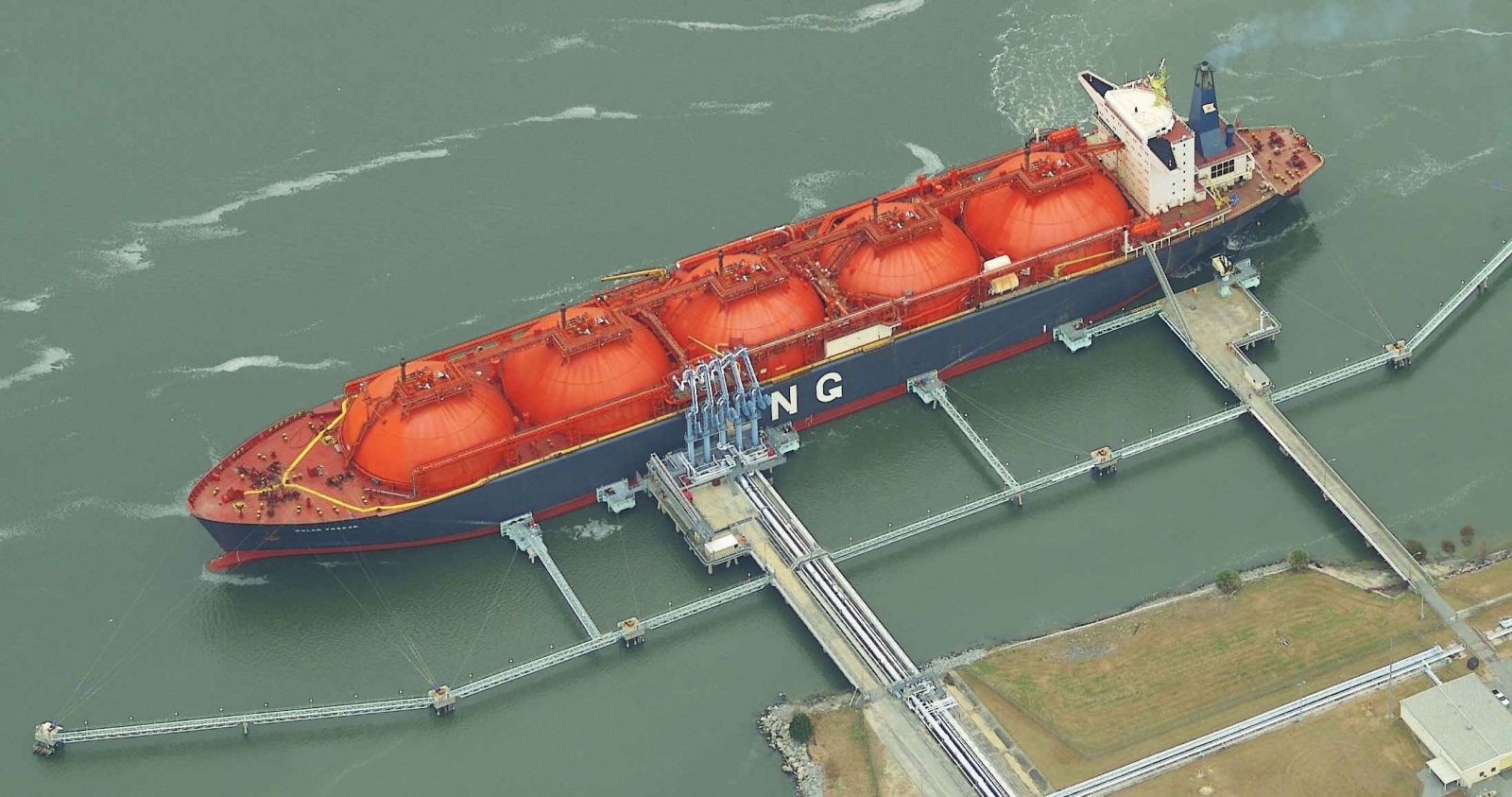

Energy supermajors are betting big on LNG, shrugging off peak gas predictions. They are ramping up their investments in LNG, seeking to capitalise on growing global demand.
With over 200 mtpa expected to enter the market by 2030, LNG markets are headed for a glut in the coming years that will bring prices quite low.
This is also the view of Total Energies’ CEO who said that the US LNG export drive may cause global oversupply.
In a policy detailed by secretary of energy Chris Wright, the US has set an ambitious goal of doubling its exports of natural gas within the next five years, a strategic move aimed at capitalising on what he called the “world’s fastest growing energy source”.
The IEA now says that gas and renewables will anchor the global energy system at a time of record uncertainty. It warned of “huge uncertainties” but sees gas and renewables playing decisive roles in balancing future global demand.
As part of the pledge to buy $750 bln of American energy, ExxonMobil expects the EU to sign long-term US gas deals. This would be a shift that would underline Europe’s long-term reliance on the fossil fuel, something that it previously resisted.
US Secretaries Wright and Burgum are urging Europe to rethink methane curbs, the main reason being that the new EU methane rule will restrict imports that exceed strict limits on methane emissions. That could be a problem for American LNG exports. Expect Trump’s wrath.
Egypt’s petroleum ministry said that work is underway in three new wells in the Zohr gas field, having recently added about 65 mln cfd of much-needed gas to Egypt’s output.
Reacting to the cancellation of the new $35 bln Israeli gas deal by PM Netanyahu, Egypt said it ‘will not be impacted’. It can rump up LNG imports using its newly acquired FSRUs, even though such gas will be more expensive.
In fact, according to MEES, Egypt is considering LNG exports after Shell doubled WDDM gas output to an eight-year high of 405 mln cfd, more than double last year’s average of 180 mln cfd.
In more good news for Egypt, BP signed a preliminary deal with Egypt’s EGAS to drill five Mediterranean gas wells.
Egypt also signed $340 mln oil and gas exploration deals with major international companies that include Shell, Eni, BP and ADNOC.
In addition, Cyprus’ energy minister Papanastasiou met his Egyptian counterpart Badawi and confirmed that the Cronos offshore gas find is on the way to become, by 2027, Cyprus’ first gas export project, with destination Egypt that desperately needs secure gas supplies.
In this year’s annual Global Gas report, the IGU said that natural gas is positioned as the most scalable and responsive solution to meet growing power needs and stabilise grids. Natural gas demand rose globally by 78 bcm (1.9%) in 2024, reaching 4,122 bcm, and is expected to continue growing in 2025 and beyond.
ExxonMobil said that the global natural gas supply decline rate is ~11% per year. This means that there is a need to add 11% new production every year to offset it and keep production flat. More will be needed to meet the 20% forecast growth in demand by 2050.
Europe ponders US dependence
Following the visit by the US secretary of the interior and head of the US Energy Sovereignty Council, Doug Burgum, Greece has emerged as a key pillar in the implementation of the EU-US agreement on the import of American energy.
In response to its recent offshore block licensing round, Greece has received an official offer from Chevron and Helleniq Energy for four blocks south of Crete and the Peloponnese. This is seen by the Greek government as indirect American support in its dispute with Turkey over the exploitation of hydrocarbons in the region.
Certainly, the US secretary of the interior, Doug Burgum, expressed his support for the interest of Chevron and ExxonMobil to conduct hydrocarbon exploration southwest of Crete during his visit to Greece.
Trump’s energy secretary sees ‘long-term’ EU dependence on US energy. He sees the $750 bln of EU purchases of US energy as just the start.
This could be another dependency on the making, with the US positioning itself as a central supplier of oil and gas globally.
But so far, European gas imports have declined by about 25% since 2022 and are still on a downward trend.
Ursula von der Leyen presented a new European strategy on the upgrade of critical electricity infrastructure and interconnection in the EU, called “Energy Highways”. Cyprus’ GSI Interconnector is also on the list.
In a significant development, the vote on the EU’s 2040 climate target – expected to be a 90% reduction in emissions – was canceled after big EU countries blocked the decision. France and Germany joined Poland and Italy in demanding that the vote be postponed until national leaders can have a say on the target.
European battery prices are plunging, down 27% from 2022 to 2025 and expected to go down by another 46% by 2030.
Europe is dragging its heels on the Draghi plan as global rivals US, China and India surge. A year on since he made his recommendations, despite the European Commission’s pledges to move quickly, only 11.2% of Mario Draghi’s ideas have been implemented.
Draghi said that the EU needs a revamped energy grid providing affordable power to industry, coordinated military procurement to wean it off US arms, and a unified financial sector that can pour capital into EU tech startups.
Draghi is also warning that Trump’s evident ability to strong-arm the EU into doing his bidding is conclusive proof that it faces irrelevance, or worse, if it can’t get its act together. The Trump deal threatens EU’s image as champion of rules-based trade
US LNG exports to double
US LNG exports are set to double by 2030, driving shale gas growth. They are on track to soar from a record 11.9 bln cubic feet per day (Bcf/d) in 2024 to 21.5 Bcf/d in 2030. But accessing dependable gas supply will require new pipelines and supporting infrastructure.
In the US, Permian oil production is now declining by 5% a year, making future growth increasingly more unlikely.
ExxonMobil has held secret talks with Rosneft about returning to Russia, in particular the massive Sakhalin project.
US shareholders have failed to pass any green proposals for first time in six years. This year’s proxy season highlighted diminishing investor support for climate agenda in the US.
Trump’s radical shift in economic approach has already begun to change norms, behaviours, and institutions globally. There are no guardrails that will automatically restore the previous status quo.
China steaming ahead
Having surpassed 1300 GW solar capacity by mid-2025, China aims to nearly double battery storage by 2027 in a $35 bln plan.
But despite this, according to official data, China generated the most ever electricity burning coal in August.
The country’s National Bureau of Statistics put power output from thermal plants (nearly all of them coal-fired) at 627 TWh in August.
The IEA said that in 2024 China started construction of nearly 100 GW of new coal-fired power plants, with global approvals for coal plants hitting their highest level since 2015. Rapid growth in electricity use is driving continued investment in coal, mainly in China and India.
In China, cheap fuel powers a coal-to-gas and chemicals boom as it seeks to curb dependence on energy imports.
China leads decisively when it comes to total electricity generation: its incremental solar and wind generation from 2021 to 2024, at 843 TWh, is greater than that of the other 19 “top 20” countries put together.
A new Russia-China gas pact, involving a new 50 bcm Power of Siberia-2 gas pipeline and LNG, could reshape global energy markets. It could reshape demand forecasts, investment decisions and contract strategies across gas markets.
Need for a ‘climate reset’
Michael Liebreich, a senior contributor to BloombergNEF, is calling for a pragmatic climate reset. He said this is essential if we are to maintain momentum toward a low-carbon economy over the next few years. The transition as we now know it is dead.
The EU regulators’ authority ENTSO-E is warning that Europe will not achieve the goals of the green transition if it does not drastically accelerate the development of electricity networks.
Greenhouse gas emissions in the EU decreased by 36.3% in 2023 compared to 1990, but at the expense of high energy costs.
Green hydrogen is growing, but not enough to meet the hype. Over the past year, the clean hydrogen narrative has turned decidedly negative, with a swath of project cancellations. With reality biting, it is struggling to gain traction.
Betting on greed hydrogen as the key solution for decarbonising industry looks increasingly like a very bad idea. Its economics look terrible.
A top European court “endorsed the view that economic activities in the nuclear energy and fossil gas sectors can, under certain conditions, contribute substantially to climate change mitigation and adaptation,” opening the way for future investments in the nuclear and gas sectors.
The need for increasing gas-fired generation became competing in Germany, where power prices rose to a seven-month high as wind output plummeted
OIES: Europe’s energy transition is facing fundamental challenges. Growing internal political friction and regulatory uncertainty, fueled by public pushback against the costs of the transition (“greenlash”) and diverging national energy strategies.
Dr Charles Ellinas, Councilor, Atlantic Council
X: @CharlesEllinas