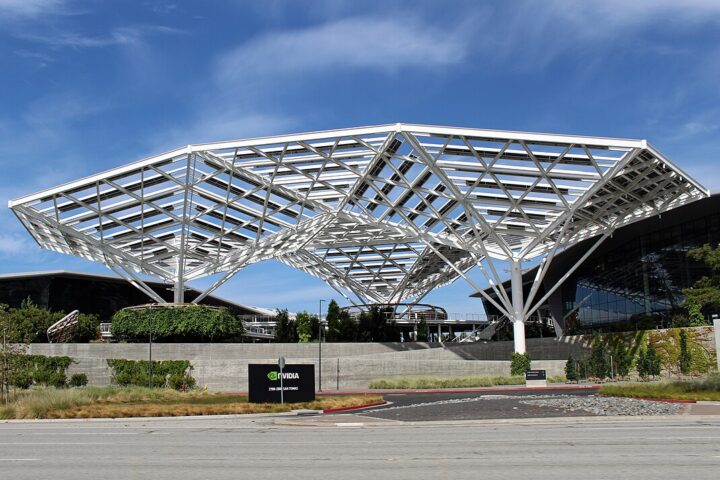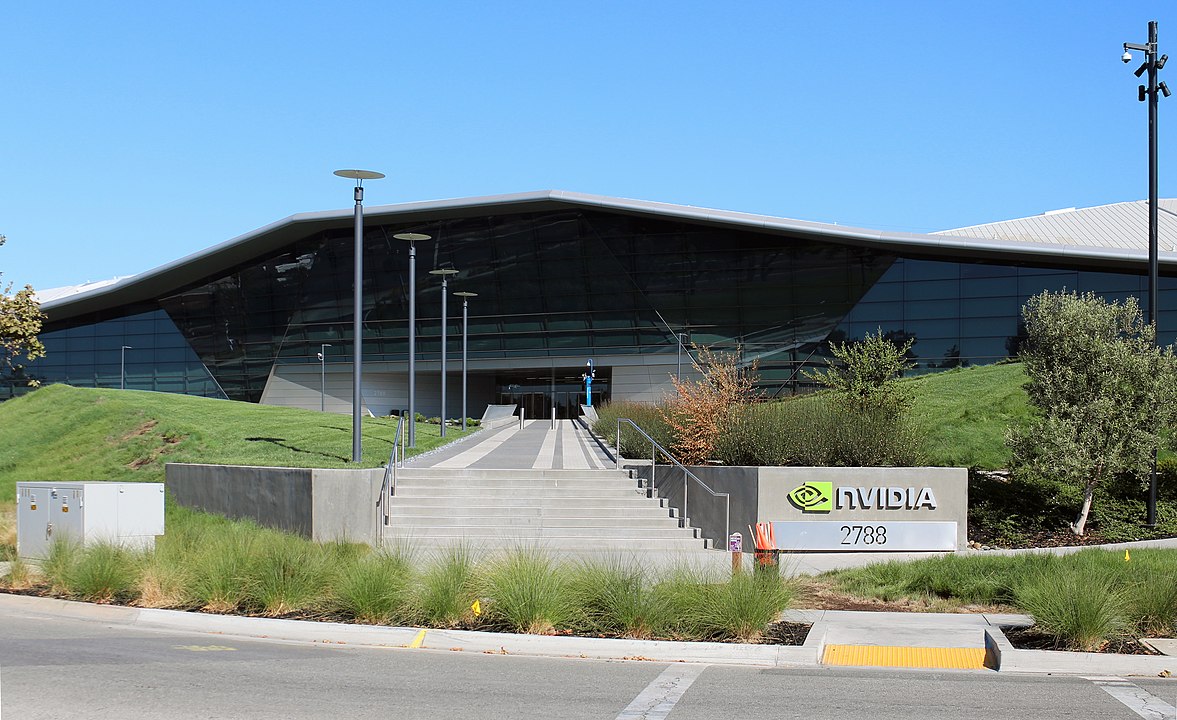

Nvidia’s market value closing in on $5 trillion has become the defining symbol of artificial intelligence’s rise — and, according to deVere Group CEO Nigel Green, a striking reminder that markets are racing far ahead of the profit reality.
“AI is transforming the world economy and remains the single most powerful force shaping the future,” said Green. “But valuations are expanding faster than earnings.
“The technology is real, the transformation is real, but the profitability still has to prove itself.”
He said that Nvidia’s march toward a $5 trln valuation captures the sheer weight of belief in AI’s potential to reshape productivity and growth.
“The conviction is right,” Green said.
“But the current market dynamic is built on expectation layered on expectation. The ecosystem is effectively trading with itself — chipmakers selling to hyperscalers, software firms selling to one another, creating a loop that looks like growth but hasn’t yet generated the profits to justify these numbers.”
Nvidia’s revenues have more than doubled over the past year, driven by insatiable demand for its advanced processors powering the global build-out of AI infrastructure. The company’s data-centre business alone has expanded at a historic pace, accounting for the majority of its record quarterly revenue of over $44 bln.
The deVere chief executive warned that while the growth is extraordinary, it remains built on anticipation more than profit.
“These numbers reflect breathtaking momentum, but they also expose the imbalance between demand for capacity and evidence of sustainable earnings.
“We’re still waiting to see where the profitability lands once the AI ecosystem matures.”
Value chain remains circular
Those chips now power virtually every advanced model, from corporate systems to generative applications. But he said that the value chain remains largely circular.
“When the same companies are both the biggest buyers and sellers of AI capacity, we’re seeing investment feeding on momentum. At some stage, markets will demand evidence that this cycle can sustain itself through actual profit.”
He stressed that this moment doesn’t mark the end of the AI boom; it marks its next, more demanding chapter.
“All revolutions reach a point where the narrative has to meet the numbers. We’re approaching that point. Investors will soon want to see whether AI’s extraordinary promise can be matched by earnings that justify the scale of belief.”
Green draws a parallel with past inflection points in technology.
“The internet, clean energy, and mobile computing all went through periods where capital flooded in faster than profits arrived.
Reshaping economy
“Then, when the commercial models caught up, they reshaped the economy. AI will follow a similar pattern — but this time, the sums involved are far larger.”
He said the current concentration of capital in a small cluster of firms magnifies both opportunity and risk.
“A handful of companies dominate chips, software and cloud capacity. The concentration is driving markets higher, but it also makes them fragile. A sustainable AI economy will depend on broader profitability across the ecosystem, not just on a few extraordinary valuations.”
Still, he insists AI must remain a central element of long-term portfolios.
“This is not about retreating from the sector. It’s about investing with intelligence. The winners will be those using AI to create measurable productivity: in energy, logistics, healthcare, and finance, for example, not just those building the infrastructure.”
Nigel Green concluded that Nvidia’s climb toward $5 trln exposes the gap between belief and proof in the AI boom. He believes this transition will ultimately strengthen the investment case.
“The coming profit check is healthy. It will clarify who’s delivering real value and who’s still trading on expectation. When that correction comes, it won’t kill the AI story, it will confirm it.”