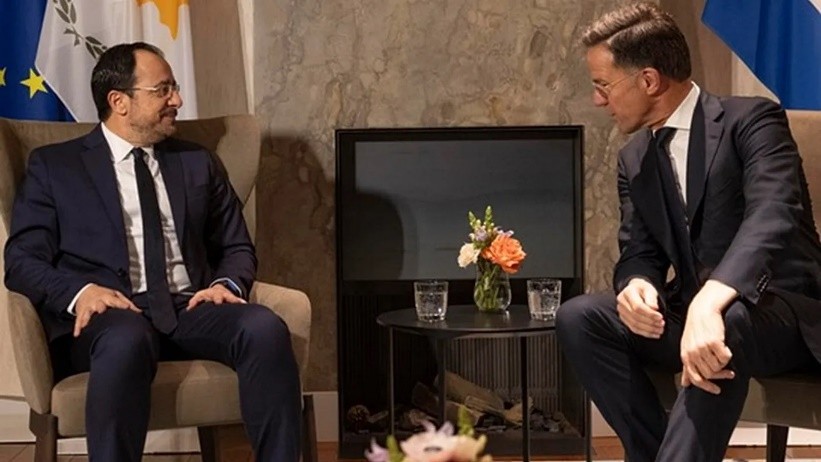

By Chris Michael
The new leadership of the North Atlantic Treaty Organisation appears to be evolving into a catalyst for fresh tensions within the western alliance instead of a bridge of cohesion between the two sides of the Atlantic.
NATO’s new Secretary-General, Mark Rutte, has already provoked strong reactions in several European capitals, with diplomatic circles even describing his conduct toward European leaders as bordering on a “persona non grata” approach.
Rutte’s stance has been characterised by complete alignment with the new American strategy that Donald Trump seeks to impose. Rather than defending a balanced trans-Atlantic relationship, the NATO Secretary-General increasingly appears to act as a political spokesperson for U.S. pressure on Europe, demanding greater financial and military compliance from European member states.
Discontent in Brussels, Paris, Berlin and other European capitals intensified particularly following his public remarks on the crisis in the Middle East. Rutte essentially conveyed Washington’s message of “insufficient European support,” adopting an assertive rhetoric that many European officials viewed as both offensive and coercive.
His intervention was perceived as an attempt to impose an American agenda through NATO, transforming the alliance from an organisation of collective defence into a mechanism of political discipline for European allies.
The situation became even more strained when the Secretary-General fully aligned himself with the American decision to withdraw troops from Germany, a move that several European analysts interpreted as a form of strategic pressure on Berlin. At the same time, pressure exerted on member states to make military bases available for operations beyond European territory generated serious political and diplomatic frictions.
Rutte went even further by openly warning the European Union against developing autonomous military structures and defence standards that could potentially compete with NATO. This position was regarded by several European governments as a direct intervention in the EU’s strategic choices.
His statement that “Europe cannot defend itself without the United States” caused particular irritation, as it was perceived as an underestimation of Europe’s capabilities and an attempt to preserve the continent’s dependence on American leadership.
Even greater concern was triggered by his public calls for member states to prepare for the possibility of a broader conflict. Such warlike rhetoric, at a time of already heightened geopolitical tensions, was interpreted in many circles as a dangerous escalation that distances diplomacy and reinforces the logic of militarisation.
It is, therefore, not surprising that several European media outlets and political analysts now describe the Secretary-General’s stance as a form of political submission to American objectives. In some cases, European governments have even implied that Rutte is acting as Donald Trump’s “Trojan Horse” within Europe’s security institutions, undermining every effort to achieve European strategic autonomy.
Rejected NATO assertions
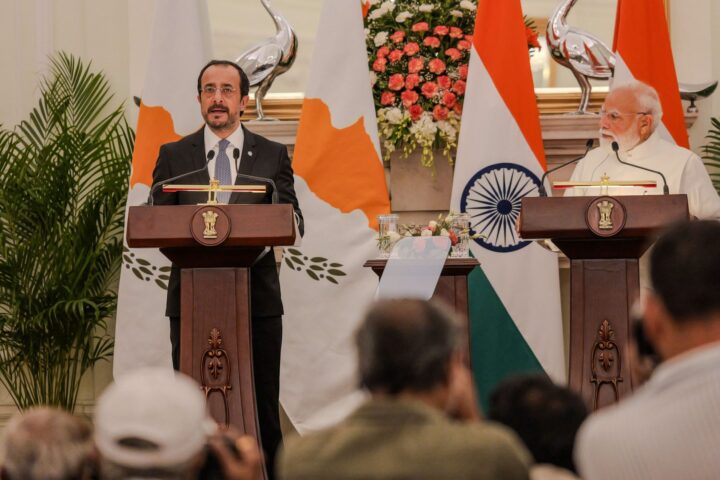
Against this backdrop, the public divergence of Cyprus President Nikos Christodoulides assumes particular significance; he has clearly rejected the NATO Secretary-General’s assertions that the European Union is incapable of building an autonomous defence and strategic policy.
The Cypriot President’s intervention carries considerable political weight because it reflects a broader European school of thought that regards Europe’s strategic autonomy not as a luxury, but as a historical necessity. The EU is now being called upon to decide whether it will continue to operate under Washington’s geopolitical shadow or whether it will develop the capacity for an independent defence, security and foreign policy.
At the same time, Turkey is seeking to capitalise on the new geopolitical reality. The Turkish Foreign Minister has openly called for Ankara’s inclusion in new European defence and security initiatives, attempting to reposition Turkey as an indispensable strategic partner for Europe. Simultaneously, European officials increasingly recognise Turkey’s geopolitical importance, both because of its geographical location and its military capabilities.
The question now extends beyond the future of NATO itself. It concerns whether Europe is capable of shaping its own independent strategic identity. And in this battle for influence, the Alliance’s new Secretary-General appears to have already chosen his side.
Chris Michael is a political commentator and business consultant