The Japan 225 CFD Index (a proxy of the Nikkei 225 futures) continues to remain in a bullish trend as expected and rallied by 5.3% to hit a fresh all-time high of 45,956 last Thursday, ex-post FOMC.
Thereafter, the Index staged a minor corrective pull-back of -3.2% to print an intraday low of 44,485 on Friday, September 19, on the onset of the Bank of Japan announcement to start unwinding its massive hoard of around 79.5 trln yen of exchange-traded funds (ETF) by market value as of mid-September tied to Japan benchmark stock indices.
BoJ aims to sell its ETF holdings at a pace of around ¥620 bln (€3.56 bln) a year by market value, or ¥330 bln (€1.89 bln) by book value, starting in 2026.
It will be a gradual unwinding process that may take more than a hundred years to complete under the current plan. Additionally, it marks the first time the BoJ has laid out a plan for offloading the assets it has accumulated over years of ultra-easy monetary policy.
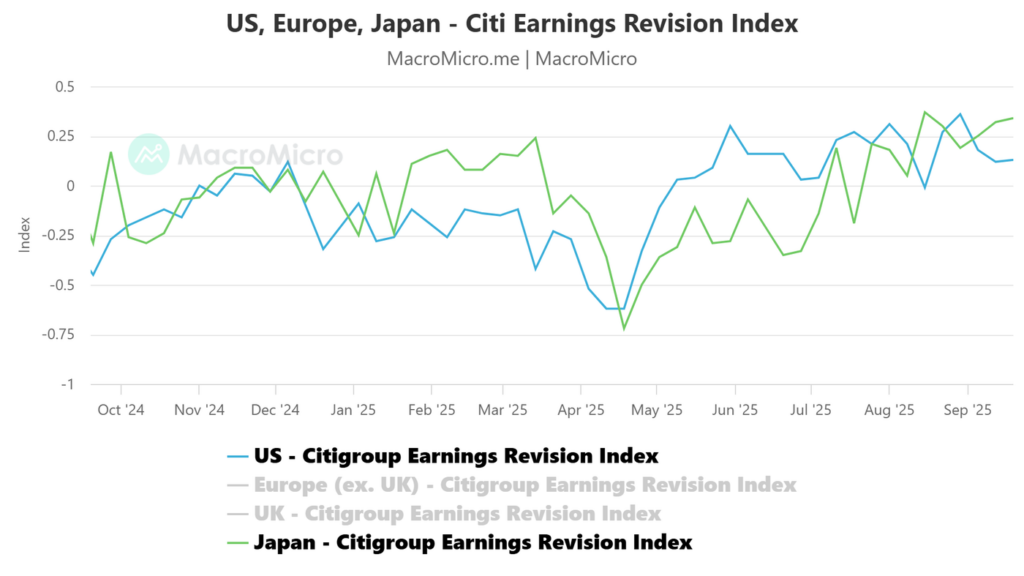
Sell-side analysts continue to upgrade the earnings growth potential of the Japanese stock market.
Based on the latest data from the Citigroup Earnings Revision Index for Japanese equities as of September 19, it rose to 0.34 from the previous reading of 0.19 on August 29.
The Japan Citigroup Earnings Revision Index has been trending upwards since June 20, printing -0.35. This suggests that analysts, on average, are becoming more optimistic about the outlook for corporate earnings in Japan, in turn supporting the ongoing medium-term bullish trend in the Nikkei 225.
In addition, the pace of analysts’ earnings upgrades in Japan rose at a steeper pace since August 29, versus the US Citigroup Earnings Revision Index.
Meanwhile, the Liberal Democratic Party (LDP) members are likely to vote for their leader in early October, with two leading contenders being Sanae Takaichi, a former internal affairs minister, and Agriculture Minister Shinjiro Koizumi, the son of a former prime minister.
Both contenders tend to have a more liberal stance towards fiscal policy and support more fiscal stimulus measures.
Source: MarketPulse