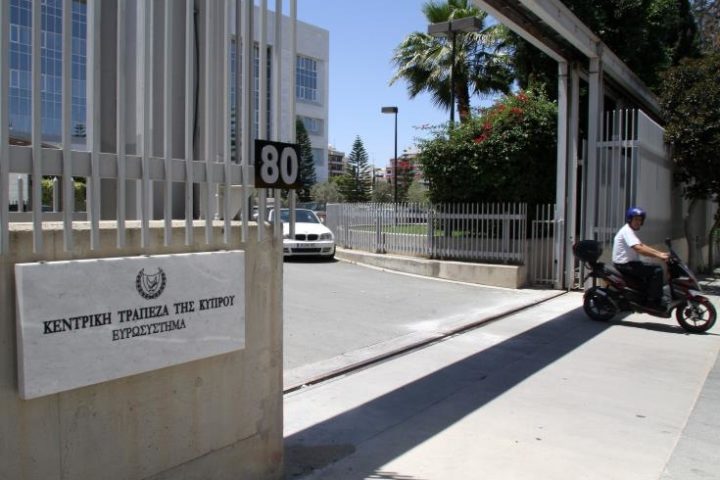

Moody’s Investor Service took a swipe at Cyprus’ big three banks on Wednesday March 2, downgrading all three banks, at the same time as praising the strong liquidity positions of the banks.
The news comes just as Bank of Cyprus starts a roadshow in London in order to raise EUR 1.34 bln in contingent convertible bonds (CoCos),
The banks’ downgrade comes hot on the heels of the two-notch downgrade of the Republic of Cyprus to A2 from Aa3 on February 24, blamed largely the government’s short-termism in its approach to cutting the public deficit.
Hellenic drops out of the prime list
For Bank of Cyprus, Moody’s cut the long-term deposit and debt ratings, as well as the standalone bank financial strength rating (BFSR), to Baa2/D+ from A3/C- with a stable outlook.
For Marfin Popular Bank Moody’s downgraded the deposit and debt ratings, as well as the standalone bank financial strength rating (BFSR) to Baa3/Prime-3/D- from Baa2/Prime-2/D+ with a negative outlook.
For Hellenic Bank, Moody’s downgraded the deposit and debt ratings, as well as the standalone bank financial strength rating (BFSR) of Hellenic Bank Public Co Ltd (Hellenic) to Ba1/Not Prime/D- from Baa2/Prime-2/D with a stable outlook.
Moody’s reported two main reasons for the downgrades of all banks.
First, the sovereign downgrade, which in turns affects the ability of a government to bail out a bank. Moody’s calls this the “systemic support indicator”.
Second, deterioration of asset quality over the past year, which led Moody’s to make “a re-assessment of the bank’s intrinsic financial strength”, as reflected by its bank financial strength rating. Moody’s said that its expectations of a further deterioration in asset quality both in Greece and Cyprus also contributed to this assessment.
What Cypriot banks do not have is a liquidity problem. Moody’s noted the increase in capital adequacy ratios with Tier 1 capital at 11.1% for Bank of Cyprus, 12% for Marfin and 12.3% for Hellenic.
Bank of Cyprus: real estate concerns
For Bank of Cyprus, Moody’s said an important consideration was high and increased levels of problem loans (defined as over 90 days due and not covered by provisions).
While it noted that these problem loans net of provisions are fully covered by mainly real estate “tangible” collateral, it was concerned about the recent downturn in the real estate market and it impact on the liquidity of the market. It said that this led to “concerns over the recoverability of such collateral.”
Despite the downgrade, Moody’s noted that Bank of Cyprus has a good liquidity position, with “ample” capital adequacy ratios and that current profitability should allow the bank to absorb higher levels of provisioning.
Also, despite the downgrades, Moody's said “the national government's commitment to support its banking system in case of need remains high, and the deposit and senior debt ratings of BoC continue to benefit from a two-notch rating uplift from their stand-alone ratings due to systemic support considerations.”
Marfin Popular Bank: exposure to Greece
As for Marfin Popular Bank, known locally as Laiki, Moody's noted that the bank relies more heavily on European Central Bank financing than its domestic peers, (17% of consolidated assets), has lower ECB-eligible assets and has a high exposure to Greece (45% of group loans).
Access to the wholesale/bond markets has become harder for its Greek subsidiary Marfin Egnatia Bank (MEB), which is due to merge with MPB at the end of March.
More positively, Moody's noted a 7% increase in group deposits despite outflows from Greece and said that the bank had “high overall liquidity ratios” and the “ability to reduce ECB financing if required”.
It added that Marfin had moderate market funding needs over the next two years and had recently strengthened its Tier 1 capital adequacy ratio to 12%.
Hellenic: high NPL
One specific reason for Hellenic's downgrade to junk was an increase in reported non-performing loans (NPLs) to 9.8% in December 2010, from 8.5% in the previous year.
History is also haunting Hellenic, with euphemistically termed “past control issues” in its Greek operations affecting asset quality and profitability, which it says the bank is now addressing.
Nevertheless, Moody's said it “expects further deterioration in asset quality indicators due to the severity of operating conditions in Greece and the weak, fragile economic recovery in Cyprus”.
As with Laiki, Moody’s mentioned concerns about the real estate market and recoverability of loans but also noted good liquidity (12.3% Tier 1 capital).
Fiona Mullen
Sapienta Economics Ltd
www.sapientaeconomics.com