
President Trump’s tariff regime, his signature economic agenda, appears to be visibly crumbling, yet financial markets are poised to rally through the debris, according to the CEO of financial advisory giant deVere Group.
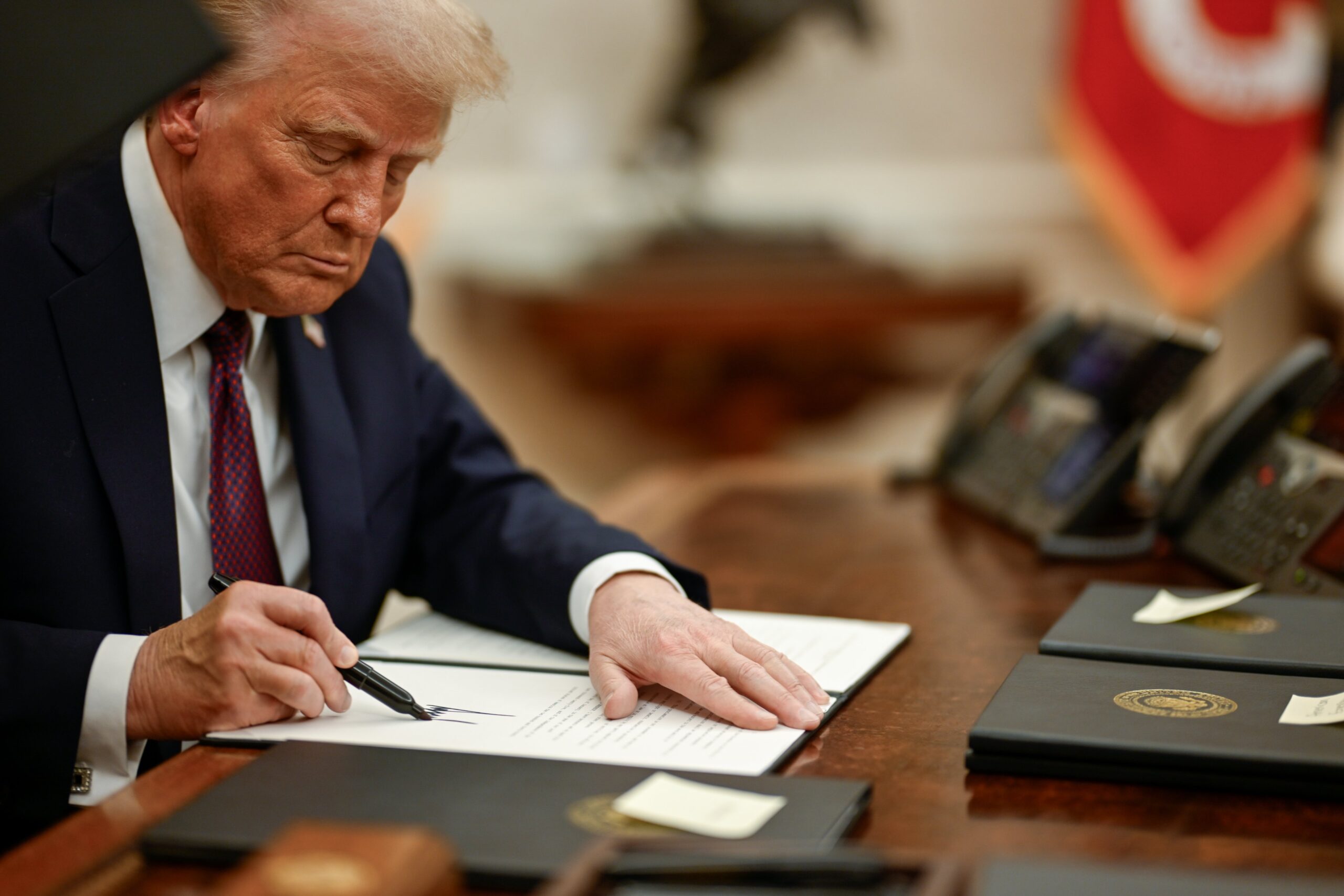
The US Supreme Court determined on Friday that Donald Trump overstepped his legal authority in rolling out sweeping global tariffs without congressional approval, handing the White House a major setback on a policy that has defined his economic agenda, and to a lesser degree foreign strategy since returning to office in January 2025.
“This ruling strikes at the core of the administration’s economic doctrine,” said deVere boss Nigel Green.
“Trade confrontation was positioned as the engine of renewed domestic strength. Instead, it now faces constitutional limits, market scrutiny and diminishing economic returns.”
Green said that tariffs were sold as a lever to rebalance trade and protect US industry. In practice, however, they functioned as a tax on importers, many of whom passed costs directly to consumers.
“Corporate margins have tightened in sectors reliant on global supply chains, and investment decisions have been delayed amid policy uncertainty.”
Recent economic data underscore the fragility of the current environment. Growth has moderated from last year’s pace, while inflation measures have shown renewed firmness in categories exposed to higher import costs.
Wage growth remains solid, yet household purchasing power is constrained by elevated prices in services and goods.
The deVere CEO explained that, “the economy’s not collapsing, but it’s losing velocity. Inflation remains persistent enough to limit policy flexibility, and business confidence is sensitive to abrupt regulatory and trade shifts.
“Friday’s Supreme Court’s decision injects a new variable into that equation,” Green added.
Sustained panic unlikely
Despite the political blow, markets are unlikely to respond with sustained panic, he argued.
“Large-cap equities, particularly in AI infrastructure, semiconductors and cloud computing, continue to attract global capital. Even if tariff authority is curtailed, the structural investment cycle in advanced computing and automation remains intact.”
Bond markets, however, may react with greater nuance.
“If tariffs are rolled back or diluted, some inflationary pressure tied to import costs could ease over time, which may support the longer end of the Treasury curve. Yet persistent fiscal deficits and firm wage growth can also be expected to keep upward pressure on yields.”
“The US dollar could experience bouts of volatility, and reduced trade tension may support global risk appetite, tempering safe-haven flows into the dollar.”
Green cautioned against simplistic conclusions. “A judicial setback does not automatically reverse the economic trajectory. Implementation timelines, potential legislative responses, and geopolitical reactions all matter.
Corporate America is likely to adapt quickly, he said.
“Many multinationals have already diversified supply chains and restructured sourcing strategies in anticipation of prolonged trade friction.
“A recalibration of tariff authority may ease cost pressures incrementally, but strategic shifts made over the past year will not be undone overnight.”
Green concluded that President Trump’s tariff-driven strategy is under clear strain following this ruling.
“The legal boundary has been reinforced, and the economic case for broad-based trade barriers has weakened.
“Yet financial markets are pragmatic. If the result is greater clarity, reduced policy unpredictability, and sustained investment in AI and tech, equities can advance even as the political narrative fractures.”