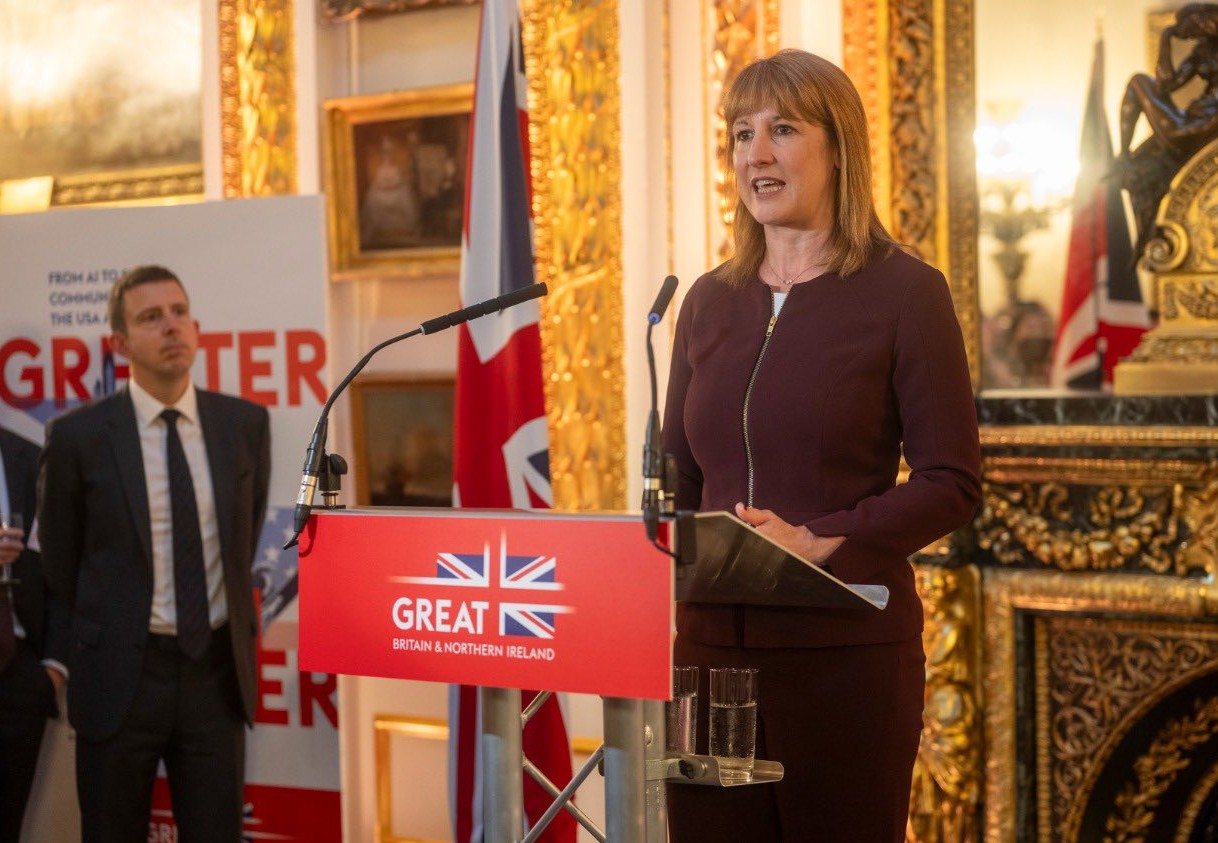

With the U.K.’s borrowing costs at a decade high and a £20 bln gap in public finances, the Chancellor of the Exchequer is confronting an unforgiving arithmetic and under intense pressure at the Labour Party conference in Liverpool on Monday.
Chancellor Rachel Reeves must reassure her fellow party members and the markets that she can hold the line on fiscal discipline, as well as answer calls to outflank the populist right.
But the political tension is unmistakable.
Yields on ten-year gilts hover near 4.75%, the steepest among the G7, tightening the screws on her fiscal rules, while the downgrade in productivity forecasts from the Office for Budget Responsibility and the reversal of welfare savings have only deepened the deficit.
On the eve of the Labour party conference, deVere Group chief executive Nigel Green warned that the combination of strained public finances and a surging Reform UK in the polls leaves Reeves little room to manoeuvre.
“The Chancellor is boxed in by her own numbers and by political reality,” said Green. “Markets will demand discipline, but her party will demand action. The path of least resistance is higher taxation.”
He explained that Labour’s commanding general-election victory last year has not shielded Reeves from growing internal dissent.
The aborted attempt to remove winter fuel payments from many pensioners, coupled with an inaugural budget that raised taxes and strained relations with business leaders, has eroded her authority.
Meanwhile, Reform UK leader Nigel Farage is capitalising on voter frustration, with fresh surveys suggesting his party could top the polls if an election were held now.
Against this backdrop, the deVere founder and CEO believes the November Budget will “inevitably” carry heavier tax measures.
“Investors should take seriously the risk of a broad-based tax grab,” he said. “When gilt yields are this high and the deficit this wide, the Treasury will look for revenue wherever it can find it.”
Green said the Chancellor has refused to rule out extending the freeze on income tax thresholds, a stealth measure that already drags more households into higher brackets each year.
Economists estimate that the current freeze, scheduled until 2028, is set to raise tens of billions in additional revenue as wages rise.
Threshold creep
“Threshold creep is a silent tax rise that catches the unwary,” the deVere CEO noted. “Couple that with the possibility of further headline increases and you have a formidable challenge for individuals and businesses alike.”
He added that the market consequences of delay would be swift.
“If the government were to flinch and rely on borrowing, the bond market would punish it instantly. The UK cannot afford a repeat of the Truss-era turmoil of 2022.
“Reeves knows that, and so do investors,” Green said, urging individuals and companies to prepare now.
“This is the moment to review wealth structures, pension contributions and international planning,” he said. “Waiting until the Budget speech is too late. By then, the measures will already be locked in, and the cost of inaction will be permanent.”
Despite the Chancellor’s insistence on pro-growth measures and back-to-work incentives, deVere analysts expect the headline on November 26 to be about revenue.
“The political narrative may be about fairness or growth,” Green concluded, “but the economic reality is that tax rises are coming. Prudent savers and investors will act before the ink is dry.”