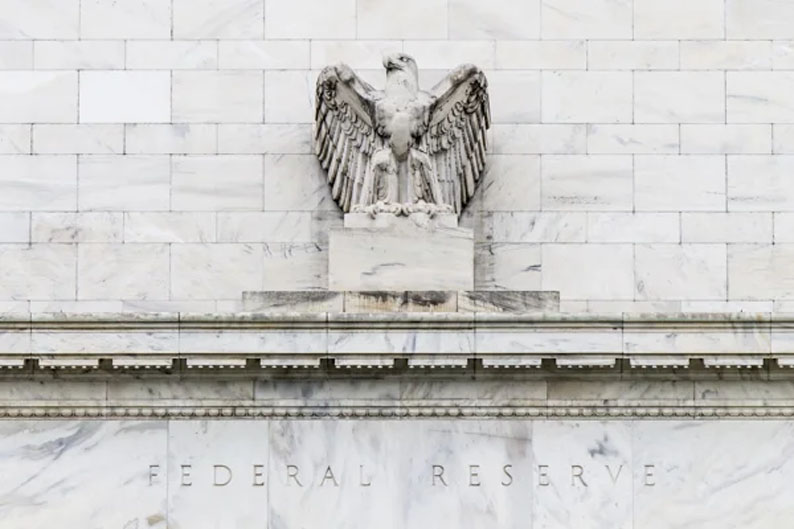

The Federal Reserve held interest rates steady on Wednesday, but the next step is clear that a cut is expected in September, and investors should prepare, according to the CEO of a leading independent financial advisory.
“The decision to hold was expected, but it doesn’t shift the path. The Fed has likely just bought itself eight more weeks before a pivot,” said deVere Group’s CEO, Nigel Green.
“We now expect that by September, the underlying softness in the economy will make a cut not just justified, but necessary.”
The Fed kept the benchmark rate in its target range of 4.25% to 4.50%, where it has sat since December.
But what was notable wasn’t so much the decision, as much as the dissent.
“When key policymakers start breaking ranks, it tells you the consensus is cracking. The U.S. economy is changing faster than the narrative.”
The headline GDP figure – 3.0% annualised growth in the second quarter – painted a picture of strength.
However, the internals tell a different story. Imports plunged, flattering the overall print, while core domestic demand slowed sharply.
“The GDP number looked impressive at first glance, but it’s built on a shrinking trade gap. That’s not the foundation of enduring growth. Beneath it, private consumption and business investment are both showing signs of fatigue,” noted Green.
Consumer spending, while still positive, decelerated from the previous quarter. Americans are becoming more selective and more cautious, a shift that matters for investors trying to assess which parts of the market remain resilient.
“We’re seeing a transition in behaviour. People aren’t panicking, but they’re hesitating. They’re thinking harder about how and where to spend. This shift will ripple across sectors, and smart investors will adjust early.”
Room to move
With inflation continuing to ease, the Fed has room to move, and the broader economic signals are now pointing in the same direction, explained the deVere chief executive.
“The case for cutting isn’t built on fear, it’s built on realism. Growth isn’t reversing, but it is thinning out. The Fed has always said it’s data-driven, and the data is evolving.”
“There’s a difference between momentum and endurance. Right now, we’re seeing the tail end of stimulus-driven resilience, but not a broad-based expansion. Positioning based on the headline alone is a mistake.”
The deVere boss is advising clients to look beyond rate hikes or cuts, and to focus instead on portfolio durability.
“It would appear that we’re entering a new phase of lower inflation, lower growth, and soon, lower rates. This rewards forward-thinking strategy over reaction.”
Green concluded that as central bankers weigh the incoming data and investors digest the mixed signals, it seems that September is shaping up to be a decisive month for the Fed to exit its wait-and-see mode.