
Syrian President Bashar al-Assad faced rare dissent within his Baath Party and signs of discontent in the army over violent repression of protesters that a rights group said on Thursday had killed 500 people.
Two hundred Baath members from southern Syria resigned on Wednesday after the government sent in tanks to crush resistance in the city of Deraa, where a six-week-old uprising against Assad's authoritarian rule erupted.
Diplomats said signs were also emerging of differences within the army where the majority of troops are Sunni Muslims, but most officers belong to Assad's minority Alawite sect.
The Baath Party claims more than a million members in Syria, making Wednesday's resignations more a symbolic than a real challenge to Assad's 11-year rule.
But along with the resignations last week of two Deraa parliamentarians, they would have been unthinkable before nationwide pro-democracy demonstrations flared last month.
Another diplomat said soldiers had confronted secret police at least once this month to stop them shooting at protesters.
"No one is saying that Assad is about to lose control of the army, but once you start using the army to slaughter your own people, it is a sign of weakness," he said.
Criticism of Assad has intensified since 100 people were killed in protests on Friday and tanks rolled into Deraa. The United States says it is considering tightening sanctions and European governments will discuss Syria on Friday.
But a European push for the U.N. Security Council to condemn the crackdown was blocked by Russia, China and Lebanon. China said on Thursday Syria should resolve its problems through talks, while Russia said Syrian authorities should bring to justice those responsible for the killings.
Syria's upheaval could have major regional repercussions since it straddles the fault lines of Middle East conflict.
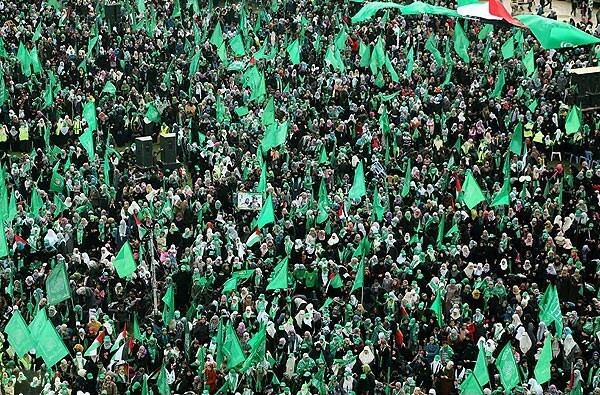
Assad has bolstered an anti-Israel alliance with Shi'ite Iran and both countries back the Hezbollah and Hamas militant groups, although Syria still seeks peace with the Jewish state.
CLASH NEAR LEBANON BORDER
Syria has blamed armed Islamist groups for the killings and accused politicians in neighboring Lebanon of fomenting violence, accusations they have denied.
A Lebanese official said hundreds of Syrians crossed the northern border into Lebanon near Wadi Khaled on Thursday after gunfire was heard on the Syrian side. It was not clear how many people were hurt in the clash but Lebanese security sources said the army had stepped up patrols in the area.
Syria has expelled most foreign correspondents, making it difficult to verify the situation on the ground.
Al Jazeera television said on Thursday it had suspended some operations in Syria, a move which a media watchdog said was the result of restrictions and attacks on Jazeera staff.
Syria says dozens of soldiers and police have been killed in the unrest, and state television has broadcast many funerals, but diplomats say some have been killed by Assad's own forces.
"The largest funerals in Syria so far have been for soldiers who have refused to obey orders to shoot protesters and were summarily executed on the spot," a senior diplomat said.
Assad sent the ultra-loyal Fourth Mechanised Division, commanded by his brother Maher, into Deraa on Monday.
Reports from opposition figures and Deraa residents, which could not be confirmed, said that several soldiers from another unit had refused to fire on civilians.
The state news agency SANA denied the reports.
Gunfire was heard in Deraa on Wednesday night. Water, electricity and communications remained cut and essential supplies were running low, residents said.
"The martyrs are being kept in refrigerator trucks used normally to transport produce, but they cannot move with the army firing randomly. We pour alcohol on the bodies to lessen the stench," one resident of the southern city said.
Scattered protests broke out on Wednesday in support of the people of Deraa. A small demonstration in Damascus was swiftly dispersed. Larger protests occurred in Tel to the north and in Zabadani on the Lebanese border, human rights campaigners said.
The Syrian rights group Sawasiah said on Thursday the death toll in six weeks of protests had risen to at least 500.
"We call on civilized governments to take action to stop the bloodbath in Syria and to rein in the Syrian regime and halt its murders, torture, sieges and arrests. We have the names of at least 500 confirmed killed," Sawasiah said in a statement.
"The shelling of Deraa is a crime against humanity."
Syria has been dominated by the Assad family since Bashar's father, the late President Hafez al-Assad, took power in a 1970 coup. The younger Assad kept intact the autocratic political system he inherited in 2000 while the family expanded its control over the country's struggling economy.
Assad's decision to storm Deraa echoed his father's 1982 attack on the city of Hama to crush a revolt led by the Muslim Brotherhood, killing anywhere between 10,000 and 30,000 people.
The latest bloodshed in Syria has been on a far smaller scale, but the unrest — involving mostly peaceful protesters, not armed militants — has spread much more widely.
"It is an open question how much killing will it take for Sunnis in the army to move, and how many cities will erupt before the loyalist units cannot cope," one diplomat said.