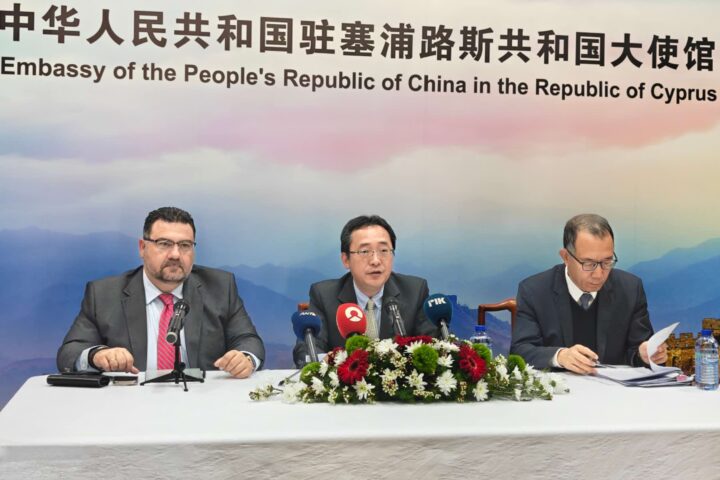

Over-regulation “is a tax”, says Sarris
Cyprus joined the Europe-wide drive for better regulation last Thursday with a seminar on how to develop “Regulatory Impact Assessment (RIA)” in Cyprus.
Over-regulation is increasingly seen in Europe as a burden on business, on society and potentially on the environment, and a key factor that can hold back the competitive advantage of an economy.
The seminar was attended by speakers from other European countries who shared their experiences of implementing RIAs in their own countries.
The change in culture towards assessing the total impact of legislation is already apparent at the EU level. The European Commission has already announced that it will cut large swathes of legislation and it is noticeable that every new Commission initiative these days is accompanied first and foremost by an explanation of how it will benefit EU citizens.
EU member states are also trying to implement better regulation at the national level.
Finance Minister Michalis Sarris noted that regulation is decisive for the effective functioning of market metchanisms but added that bad regulation or over-regulation “is a tax”.
“The art is to find a balance,” he said and to find legislation that is simple to understand and easy to apply.
Dr Andreas Charalambous, Economic Director at the Ministry of Finance, said that better regulation is not about changing objectives and not about cutting the size of the public service (which unions fear the government is trying to do) but about “achieving objectives in a more efficient way with less bureaucracy”.
Current consultation is ad hoc
Noting that the government already consults widely on legislation but in an ad hoc way, Charalambous outlined a long to-do list for implementing RIA in a more systematic way.
Among requirements he listed were the computerisation of laws, a task force and dedicated unit for RIA, assessing best practice elsewhere, developing a methodology for systematic assessment of the social, economic and environmental impact of legislation, and dialogue with stakeholders.
Political commitment from all sides, support from the private sector and a change of mentality by both the public and private sector would be crucial.
Charalmbous noted that the process could take several years.
“It is a complicated, time-consuming procedure,” he said.
How the Dutch did it
Jeroen Nijland, Head of the inter-ministerial unit in the Dutch Ministry of Finance which oversees RIA, told the Financial Mirror that, in implementing RIA, the Netherlands found that there were three key ingredients.
First, you have to “map the burden” of legislation by “monetising the costs”: essentially putting a figure on the cost to the economy, society and the environment of legislation and regulation.
Around 12 to 13 EU countries are already using a standard cost model to measure this burden.
Second, echoing statement by Charalambous, Nijland said that they needed an organisational framework. This is especially important because it affects many different government ministries.
“This is a cross-cutting issue. Somehow you have to ensure tha all ministries are involved and find out how to manage the horizontal issues,” he said.
The third critical factor is “political incentives or ambitions”, such as a reduction target.
“We had approximately 90 measures to reduce the burden by 25% over four years.”
Nijland said that the process involves changing a lot of legislation.
They also found that although around half of the legislative burden came from the EU, “sometimes we found that we were goldplating it”.
Goldplating is the practice of taking a fairly simple piece of EU legislation and adding stricter requirements.
“Or if we can’t change the EU legislation we can think of ways t make it more efficient to comply, for example through IT solutions.”
Overall, Nijland says that in implementing RIA, “the costs are not very high but the returns are very big.”
KEVE outlines Cyprus’ areas of concern
Cyprus Chamber of Commerce (KEVE) President Manthos Mavromatis gave a very detailed presentation of the current burden on Cypriot business, based on KEVE’s dialogue with its own members.
The Financial Mirror will deal with these more in depth in a later issue, but some of the main areas mentioned were property development, customs, food processing health requirements, foreign labour and public procurement.
Fiona Mullen