753 vie for 56 seats in new House
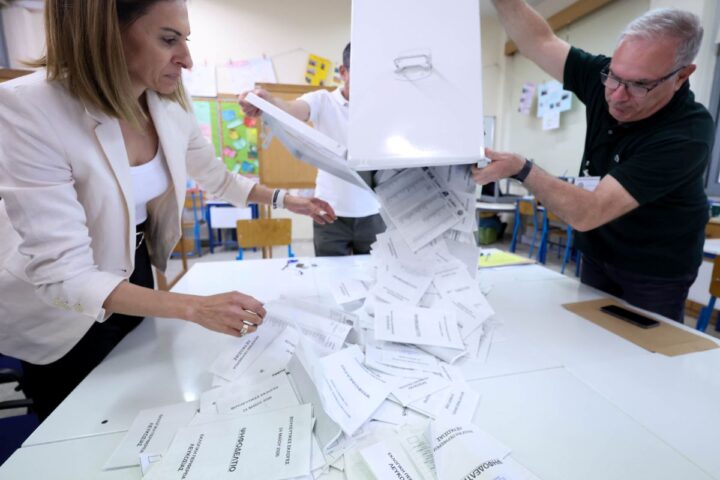
Cyprus will go to the polls on May 24 to elect the 56 members of its next parliament, with a record 753 candidates submitting their candidacies on Wednesday.
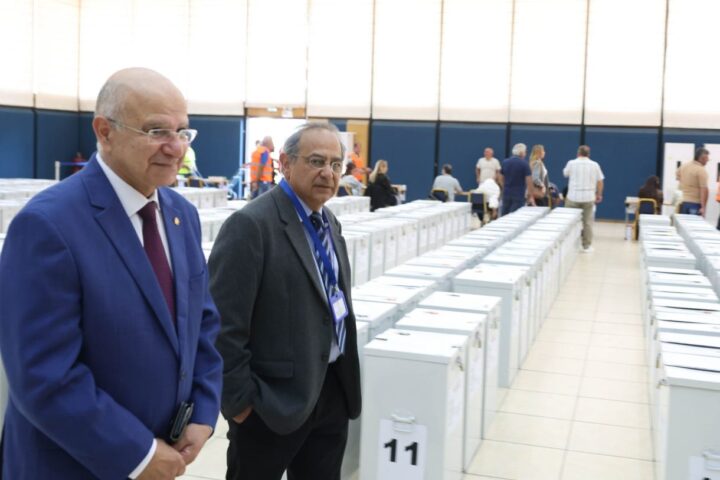
Elikkos Elia, the Director General of the Interior Ministry and Chief Returning Officer for the elections, said that there were 102 more candidates than the previous elections in 2021, representing a record 19 party tickets and nine independents.
Dr Elia added that 529 were male candidates, or 70.3%, with only 224 women on the electoral list.
He said on Thursday that there had been only one objection, against a female candidate from Limassol, but the electoral commission rejected it, so the total remains at 753.
Getting the green light, as objections closed on Thursday noon, Elia said the ballot papers will start printing on May 9.
Opinion polls suggest it will be fragmented House when deputies take their seats on June 4, despite the threshold being 3.6% of the national vote, double than what it was a decade ago.
Eight parties in the outgoing parliament are seeking to remain in the House of Representatives, with the two frontrunners, the centre-right Democratic Rally (DISY, EPP), headed by House Speaker Annita Demetriou, and the communist AKEL (GUE/NGL), struggling to maintain their 17 and 14 seats, respectively.
The third biggest political group, the Democratic Party (DIKO, S&D), is also expected to have a hard time to keep its nine deputies, as the traditional parties will be confronting extremists and newcomers, as a result of voter frustration and protests over corruption, nepotism and scandals linked to the incumbent and past administrations.
Nationalist ELAM (European Conservatives and Reformists), is confident it will be the third biggest group in the new parliament, more than doubling the three deputies it had in the outgoing House.
Newcomer Volt, the Cyprus branch of Volt Europa, is also expected to pass the threshold and hopeful that it will increase its presence from the single MP to a handful.
It is doubtful if the socialist EDEK, DIKO-offshoot Democratic Alignment (DIPA) and the Ecologists will reach the threshold, with recent opinion polls placing them below the 3.6% mark.
Newcomers ALMA and Euro-MP Fidias Panayiotou’s online party, Direct Democracy, could be the outsiders to upset the establishment and gain seats, with smaller groups including veteran footballers, journalists and TV personalities on their tickets to secure a good turnout.
Millennials, TV stars and footballers
Apart from a good number of millennials, newcomers to politics include actor Christoforos Christoforou (DISY), Alpha TV newscaster Constantinos Constantinou (AKEL), TV personality and producer Melanie Steliou (AKEL), theatre star Elena Papadopoulou (DIKO), Sophia Vassiliou (Volt), daughter of former President George Vassiliou and EU Commissioner Androulla Vassiliou, and veteran footballer Costas Malekkos (Green Party).
Controversial social media influencer and former chairman of the Olympiakos Nicosia football club, Christoforos Tornaritis is heading the anti-establishment “Sikou Pano” (Stand Up) ballot, and will be joined by his wife, fashion designer Ramona Filip, making them the only couple candidates.
The oldest candidate in the May 24 elections is 89-year-old musician Christakis Rotsides from Limassol.
Betting agency Stoiximan gives the two frontrunner parties DISY and AKEL high odds of 1.57 to one and 2.70, respectively. The odds for ELAM, Direct Democracy and ALMA are a distant 12.00, 15.00 and 17.00 respectively, while DIKO trails with 25.00 odds, and the smaller Ecologists, EDEK and Volt a disappointing 80.00. With just 150.00 odds, DIPA is doubtful if it will enter parliament.
Interestingly, the Stoiximan bets also showed odds of 1.55 for seven parties or less entering the House and 2.35 for eight parties in the next parliament.
This could be the reason why election officials expect a higher turnout from the 65.7% among the 557,836 voters registered in 2021, with the number of new first-time voters raising the current number of voters to 561,253.
Booths will be set up at 1,200 election centres throughout, as well as in Greece and the UK.
The election outcome will also determine if incumbent President Nikos Christodoulides, will have strong or weak support in the next parliament, while party strength will also pave the way for coalitions ahead of the 2028 presidential elections.
Due to population shifts, the capital Nicosia is giving up a seat, electing 19 deputies in the new parliament, with Paphos increasing from four to five seats. Limassol remains with 12 seats, Famagusta 11, Larnaca 6 and Kyrenia 3.
Fron the outgoing House, 18 MPs are not seeking reelection, while three MPs have switched sides and seek re-election with another party.
Meanwhile, the island’s three minorities representing the Armenian Orthodox, Maronite Catholic and Latin Catholic groups, also elect MPs, with two Maronites challenging their community leadership – business consultant Petros Nacouzi and outgoing MP for Kyrenia, economist Marios Mavrides.
The Armenian and Latin candidates were unopposed, and Vartkes Mahdessian was declared on Thursday for the fifth consecutive time, while Antonella Mantovani will represent the Latins for a third consecutive term.